Bollworms continue in high numbers in soybeans

Dr. Angus Catchot reports on bollworm activity in soybeans

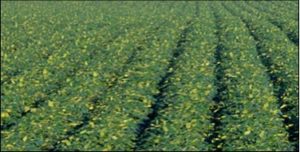
Bollworm treatments are continuing to go out on late planted soybeans. While many are treating threshold levels there are some facing unbelievable numbers (greater than 100 per 25 sweeps). We are leaving more worms in the field this year than in years past with straight pyrethroids. Some can be explained with coverage, others cannot. Ryan Jackson’s pyrethroid monitoring is not showing anything unusual in MS to date with respect to resistance, however, LA testing program is showing extremely high levels of survival in their test. There is also budworm populations mixed in at low levels this year in some places (confirmed) and there have been several consultant reports of flushing fairly high levels of budworm moths from soybeans. Budworms generally make up a small percentage of the overall population. Two years ago, we had a population from Clarksdale that was 15% budworms in soybeans. We are seeing better control of bollworms when adding 0.5 lbs of Orthene with the pyrethroid. Although Orthene alone has little to no activity on bollworms in MS, when mixed with a pyrethroid control is better than with either one alone.

Leave a comment

Aphids: On the Increase says Dr. Angus Catchot

Up until the last 10-14 days I would characterize this as one of the lightest aphid years we have had in a long time. However, we are seeing a drastic increase in aphid numbers now in some areas. As many of you know we have been seeing some tolerance to the neonics in recent years with aphids and some cases have seen field failures. There is no longer a system in place to test for the aphid fungus. Generally this is the time of year we should start picking up the aphid fungus but we having to rely on consultant observation to spread the word. To date, I have had no reports of aphid populations crashing in any fields, in fact they are building. I can’t help but think it is right around the corner but some fields I have seen have considerable numbers and honeydew present. When treating aphids with neonics it is critical to use methylated seed oil (MSO) as your surfactant. Any of your retailers will have this if you ask for it. LSU and MSU have both shown considerable increases in efficacy when 0.5% MSO was used instead of crop oils and other surfactants. Remember, that some of these products are slow acting and best results are seen 5-7 days after treatment.

Leave a comment

Agronomic Crops Field Day 2010 – D. D. Lewis Keynote Speaker

The 2010 Agronomic Crops Field Day will be held on Thursday, July 15, 2010 at the Charles W. Capps, Jr. Center at the Delta Research and Extension Center in Stoneville, Miss.

Football great D.D. Lewis will be the keynote speaker at the Field Day.

A former Dallas Cowboy linebacker, Lewis was an All-American and Southeastern Conference Player of the Year in 1967 at Mississippi State and was inducted into the College Football Hall of Fame in 2001.

Lewis lives in Texas and works for Potash Corp. of Saskatchewan, a fertilizer company. His main duty is working in the company’s community outreach program and speaking in schools about crop nutrients and lessons he has learned in life.

“We are extremely delighted to have Mr. Lewis as our luncheon speaker. He’s a true Bulldog and well-known to fans and friends of Mississippi State,” said Steve Martin, DREC head.

In addition to Lewis, field day participants will be able to hear updates on Mississippi corn, cotton, rice and soybean production as well as fungicide use, weed control resistance and insect management.

Registration begins at 8 a.m. with presentations starting at 8:30. Lunch will be served from 12:15 to 1 p.m.

For more information, contact Jody Stovall, DREC location coordinator, at (662) 686-3216 or jstovall@drec.msstate.edu

For more information about programs log onto www.msucares.com/drec

Leave a comment

Importance of tassel stage and irrigation in corn – Erick Larson, Ph.D.

The following article by Dr. Erick Larson, Grain Crops Agronomist, MSU, first appeared in the Mississippi Crop Situation Newsletter #10.

Importance of tassel stage and irrigation

Tassel is a growth stage which receives tremendous attention because it starts the transition from vegetative to reproductive development. Tassel along with silking comprise the critical pollination process, during which corn is most sensitive to stress. However, assuming that growth stages following tassel are not very important or management inputs (fertilizer, irrigation, fungicide, insecticide, etc…) applied at these timings are not going to be responsive, is absolutely false. Infect, during the early reproductive growth stages, including tassel, silk, brown silk, etc…, crop response variance is essentially negligible and has virtually no relevance for management decisions. If the crop has an amendable problem, such as a nutrient deficiency or water deficit, prior to tassel, you will minimize yield reduction by restoring nutrition or moisture to adequate levels prior to tassel, because corn grain development is extremely dependent upon high photosynthetic energy production during pollination. However, if the crop is currently fine, issues developing any time during the 60 day grain filling period can certainly be resolved with prudent timing. Furthermore, the crop may actually be more responsive, compared to premature, impulsive input timing. This is an area thorough crop scouting can substantially improve the profitability of your corn production system. Any stress endured during the season permanently reduces corn productivity. In other words, growing high corn yields is somewhat like running a drag race against a clock. Not only is any mistake going to cost you performance, but each slip‐up essentially lowers a governor on the engine further, where you can never return to full speed. The most significant lesson regarding growth stages is that issues occurring during early reproductive stages lower the crop’s yield governor more than previous or later stages.


Water use and irrigation

Corn’s most critical and largest moisture requirement occurs during a four week period following tasseling, which will occur during June through mid‐July for most of Mississippi’s crop. Thus, since most of our crop has recently tasseled or will tassel relatively soon, this season’s crop will be extremely dependent upon rainfall or supplemental irrigation during the upcoming weeks. Potential corn yield can be reduced up to 4 ‐ 8 percent per day due to water deficit during this period. Thus, insufficient irrigation water and/or slight delays can quickly reduce yield potential and evaporate profitability. Conversely, excessive irrigation and/or rainfall can also stunt crop growth and cause other problems, which limit yield as well. This scenario was a primary issue last year. Therefore, monitor your soil moisture in the profile and try to achieve balanced soil moisture relative to moisture demand at various growth stages. Corn plants use about 1.50‐1.75 inches of water per week during peak water use, so producers nearly always must supplement rainfall with irrigation to meet crop demand during this extremely critical period.

Leave a comment

2011 MACA Annual Conference – Date Change

The 2011 MACA Annual Conference will be held on January 25 and 26, 2011 instead of the previously announced date of February 1 – 2, 2011. A conflict of dates with the National Cotton and Rice No-Til Conference to held in Baton Rouge, LA caused this change. The Conference will be held at Bost Extension Building as it has been in the past.

The building will be open on Monday, January 24, 2011 from 1:00 – 5:00 p.m. for exhibitors to set up their trade show booths.

Leave a comment

Maximize Early Season Growth in Cotton by Dr. Darrin Dodds


Darrin M. Dodds

Mississippi State University – Extension Cotton Specialist

Importance of Maximizing Early Season Growth: As we all know, early season growth of cotton is very slow, especially compared to other row crops in Mississippi.  One of the main reasons for slow early season growth of cotton is limited leaf area.  Solar radiation drives cotton growth and development and as such, sunlight that is intercepted by soil and not plants does little to aid in growth and development.  One way to determine the ability of a plant to intercept solar radiation is through measurement of leaf area index (LAI).  Leaf area index is defined as the total area of leaves in a crop divided by the land area the crop covers.  For example, a LAI = 1 indicates that in one acre of land (43,560 ft2), there are 43, 560 ft2 of leaf area.  Leaf area index at emergence may be as low as 0.01, up to 1 at pinhead square, and may exceed 5 at peak bloom.  Prior to canopy closure, maintaining maximum leaf area and thereby promoting maximum crop growth is essential to promote earliness and maintain yield potential.  Although the above information may seem academic in nature, it highlights the importance of maintaining maximum leaf area (through management of early season pests, etc.) and in turn provide young cotton plants with maximum potential for early season growth, and ultimately, yield.

Table 1.  Days required to reach various growth stages.
Growth Stage Days
Planting to Emergence 4 to 9
1st True Leaf Unfolds 14
Emergence to 1st Square 27 to 38
Square to Flower 20 to 25
Planting to 1st Flower 65
Canopy Closure 75
Peak Bloom 93
1st Mature Boll 95
1st Open Boll 110

Cotton Leaf Spot Disease and Utility of Foliar Fungicides: Cotton leaf spot diseases have become increasingly common in Mississippi over the past several growing seasons.  In 2008, it is estimated that the leaf spot disease complex cost Mississippi producers approximately $20 million.  However, at times it can be difficult to determine the true impact of the occurrence of leaf spot diseases on cotton yield.  In addition to increasing occurrence of leaf spots diseases, hardlock and bollrot have been problematic over the past couple of growing season for a number of reasons.

Headline™ and Quadris™ were labeled for use in cotton production in 2007 and 2008, respectively.  Research has been ongoing over the past couple of years to determine their utility in cotton production systems.  Foliar fungicide application can reduce the level of leaf spot disease on cotton; however, application timing is critical.  Fungicide application once foliar diseases are visually apparent will not cure existing damage; however, they may prevent further spread of foliar diseases on the plant.  Plant tissue that is necrotic due to foliar disease (or other causes) will not be brought back to life through a fungicide application.  Limited research on the effect of foliar fungicide application on hardlock/bollrot occurrence and cotton yield has yield mixed results.  Studies at Mississippi State University (and several Universities as part of a large effort to address this topic) have been underway for the past two growing seasons examining the utility of foliar fungicides on cotton.  Results from these tests indicate no difference in total nodes per plant or incidence of hardlock/bollrot following foliar fungicide application.  Minor differences were present in gin turnout; however, these are most likely due to variation among varieties tested are of little economic significance (Table 2).  In addition, no yield benefit was observed in our experiments in 2008 and 2009 (Figure 1).

Many times when foliar diseases become problematic there is an underlying cause.  In nearly all cases that I have seen in the past couple of years, the onset of foliar disease is accompanied by potassium deficiency in leaf tissue.  However, it is important to understand that soils that test high in potassium do not always translate into plants with adequate potassium levels.  Root growth restrictions due to low pH, hardpans, excess early season soil moisture, etc. can limit uptake and utilization of potassium and other nutrients later in the season especially when soil moisture is low.  In addition, excess soil moisture can also reduce nutrient uptake, especially on heavier clay soils.  Physiological differences among varieties may play a part in nutrient uptake and utilization.  In general, earlier maturing, fast fruiting varieties may be somewhat more susceptible to deficiency of some nutrients.  Although adequate nutrient levels may be present in the soil, these varieties may not be physically able to take up required amounts of a given nutrient during peak demand periods.  When this occurs, a nutrient deficiency may occur within some leaves on the plant.  Essentially, anything that restricts root growth and/or nutrient uptake can pre-dispose cotton to be susceptible to foliar disease.  Based upon our data, we have not identified if and/or when a foliar fungicide will be of benefit in regard to hardlock/bollrot control and yield enhancement.  Foliar fungicides may be used to reduce incidence of foliar disease; however, application timing is critical.  Amounts of potash and lime that can be purchased for the same price as would be spent on foliar fungicides, including application costs, are given in Table 3.  Because we have not identified proper utility of foliar fungicides in cotton, if you have a grower willing to spend money on fungicides, I would encourage them to not apply a fungicide and use that money to correct fertility, pH, or other problems to improve their overall production system.

Table 2.  Effect of fungicide application on total nodes, % hardlock/bollrot, and gin turnout.

Fungicide

Application Rate Application Timing

Total Nodes

Hardlock/ Bollrot

Gin Turnout

—— # —— ————– % ——————
Quadris™ 12 oz 1st Bloom 17 25 40.0
6 fb 6 oz 1st Bloom fb 14-21 Days 18 22 40.5
6 fb 12 oz 1st Bloom fb 14-21 Days 17 21 40.3
Headline™ 12 oz 1st Bloom 18 21 39.2
6 fb 6 oz 1st Bloom fb 14-21 Days 18 25 40.8
6 fb 12 oz 1st Bloom fb 14-21 Days 18 22 40.1
Untreated 18 24 39.5
LSD (0.05) NS NS 0.01
fb = followed by

NS = not significant

Figure 1.   Effect of fungicide application on cotton yield (expressed as % of untreated i.e. if a given treatment yields 1200 lbs/ac and the untreated yield is 1000 lbs/ac then the treatment provided a 20% yield increase).
Table 3.  Potash and lime product and application cost compared to fungicide product and application cost (Fall 2009 prices used).
Fungicide Application Rate Fungicide Cost Equivalent Potash Equivalent Lime
—– $/ac—–
Quadris™ 12 oz $36.53 111 lbs 1 ton
6 fb 6 oz $42.03 132 lbs 1.2 tons
6 fb 12 oz $57.55 194 lbs 1.6 tons
Headline™ 12 oz $38.50 121 lbs 1.1 tons
6 fb 6 oz $44.00 142 lbs 1.3 tons
6 fb 12 oz $60.50 205 lbs 1.7 tons
Leave a comment

Early Season Cotton Insects by Dr. Angus Catchot

Cotton:

As we move into the 2010 growing season there are a couple of insect pests that producers need to be thinking about.  Tarnished plant bug is the number one cotton insect pest in the state of Mississippi, particularly in the delta region of the state.  In 2009, producers in the delta averaged 6.5 foliar sprays for TPB and the hill region averaged 2 sprays per acre.

Tarnished plant bugs have been known to be highly resistant to pyrethroid insecticides and more recently USDA-ARS in Stoneville has documented resistance to organophosphate insecticides in areas of the mid-south as well.  As we move into 2010, producers should pay particular attention to cotton/corn interfaces.  Where cotton and corn are planted adjacent to one another, particular attention should be focused on the 24-36 rows immediately adjacent to the corn.  In many cases border applications can be applied next to the corn before plant bugs move across the entire field.

Over the last several years Entomologist’s in the mid-south have made the recommendation to add a pyrethroid insecticide in combination with the organophosphates and neonicotinoids after first bloom.  These co-applied or premixed products have greatly increased the efficacy against tarnished plant bugs.  Because TPB populations in some areas of the delta have been extremely high, often requiring 10 or more sprays during the growing season.  Dr. Jeff Gore, Research Entomologist, DREC, has been testing the impact of delayed timings of repeat applications in high plant bug areas.  His research has shown that follow up applications when applied 4-5 days after initial treatment rather than 7-10 days after initial treatment has greatly increased control in high plant bug areas. The shortened spray intervals have been consistently more successful in breaking the cycle.

Before B.t. cotton “earliness” was often talked about to avoid late season build up of tobacco budworms.  The same principle can be applied to TPB’s as well.  Another aspect of Dr. Gore’s work focuses on getting a crop in and out early.  This can be achieved through either early planting or choosing an early season variety.  In 2008 and 2009, Dr. Gore’s research averaged a reduction of 2 sprays in early maturing varieties compared to full season varieties simply by getting the crop out early and avoiding the late season buildup of plant bugs.

Since 2005, spider mites have also become a major factor in Mississippi cotton.  Although spider mites have been around for many years, they are being treated earlier in the season than ever before.  It is not uncommon in the delta area of the state to have to fight spider mites on 1-4 leaf cotton.  Traditionally spider mites were considered a late season pest.  Over the last several years we have began to get a better understanding of some of the yield limitations from spider mite infestations.  It is critical to treat spider mites before uniform symptomology begins to show up across the field.  Limitations have been the cost of application and unwillingness to spend money on materials that typically only control mites.  Now more than ever before we have many very good spider mite chemistries available to treat with if necessary.  Tips for spider mite management include: (1) do not flare mite populations by making unnecessary applications with pyrethroids or acephate.  (2) Remove all vegetation at least 3-4 weeks prior to planting that may already contain spider mites in the field.  Henbit is a major host of spider mites. (3) Always use the appropriate rate on the label. (4) Finally, be careful not to move mites from infested fields to uninfested fields with equipment or sweep nets.

Leave a comment

Thief stealing your corn yields? Careful analysis can provide clues.

The article below was published and first seen in the March 3, 2010 issue of Delta Farm Press by Hembree Brandon, Editorial Director.

In case you can’t find your notes from the session with John McGillicuddy, independent agronomist in Iowa City, Iowa,  at the recent MACA Annual Conference read this article.

Thief stealing your corn yields?     Careful analysis can provide clues

By Hembree Brandon

Farm Press Editorial Staff

hbrandon@farmpress.com

“The greatest yield potential you’re going to have with a corn crop,” says John McGillicuddy, “is the day the corn germinates — it’s downhill from there, the corn yield curve never goes back upward; there are no do-overs in corn production.”

Corn will hold a relatively constant yield potential until it hits stress, and then it can unload 20 bushels, he said during a seminar on corn production at the annual meeting of the Mississippi Agricultural Consultants Association at Mississippi State University.

“Whenever a corn plant goes on the defensive, it starts dumping yield. It could be a nutrition problem, it could be because plants are too crowded — there are many, many reasons. What we’re looking for is the thief that stole our last 20 bushels of yield.”

McGillicuddy, an independent agronomist at Iowa City, Iowa, with farmer clients in several states, is an expert at determining where yield potential was lost. His education was in chemistry, but his résumé includes more than 20 years in hybrid/fertility research, field agronomy, technical support, and weed science, including stints with seed companies and the largest crop insurance company in the U.S., evaluating agronomic techniques to reduce risk in cropping systems, and as a consultant/trainer for numerous ag companies and organizations.

“We have clients who, if they pick just 220 bushels, are disappointed; they call us up and want to know what went wrong,” McGillicuddy says. “With $350 land rent, they have to get that kind of yield to pay the bills and make a profit.

“It wasn’t that long ago that 150 bushels was considered a good yield; now, most of our farmers would consider that a catastrophe. The genetic potential in today’s corn varieties, we’re told, is somewhere around 400 bushels.

“Your mission in a corn field is to determine what you can do to influence the outcome of that crop. And if you don’t get the yield you feel the crop should have produced, you need to utilize diagnostic tools and knowledge to determine what went wrong so you can solve the problems that took your last 20 bushels of yield. If you can’t solve those problems, you’re not accomplishing anything.

Corn yield can be reduced to a simple equation, McGillicuddy says: kernel numbers X kernel weight = yield.

“The first thing I want to know when I look at a field that didn’t meet its yield potential is, which part of this equation let me down? Then, why? And was there anything I could have done about it? This information needs to be collected before you harvest the crop so you will be able to analyze it and determine how you can correct it next year.

“It comes down to this: You can’t afford to grow barren stalks. First, look at the girth and length of ears and weight. We budget for 7 bushels per 1,000 plants. If ear count was down, we almost always are looking at something that happened between germination and emergence. If the loss was because of kernel weight, that indicates something happened mid- to late dough stage and beyond — nitrogen availability, limited sunshine in August, or perhaps dew and fog that can cause leaf diseases.

“Is the ear girth within normal range for that variety? You want one-third or more of the ears to be in the upper range of girth for that variety. Kernel count on the ear should be about equal from a couple inches from the butt to a couple of inches from the tip.”

Corn development has two stages, McGillicuddy notes: yield establishment and yield preservation.

“When you lose yield, it will be either in the early development stage when yield is being established or the late development stage when yield is being preserved.”

Growers are planting much earlier, into colder ground, he says, and that can affect vital nutrient uptake.

“It used to be in Iowa that we planted corn about Mother’s Day in May, now it’s about April 1-10. The weakest period in a corn plant’s life is from germination to emergence, and the faster it gets out of the ground, the better. Until it gets leaves into the atmosphere, the corn plant cannot respirate effectively, so it needs to get up quickly. Thirteen days is the magic number from germination to emergence.”

Replanting is “one of the most difficult decisions to make,” McGillicuddy says, “and the following 60 days of weather after you’ve replanted will prove you really smart or really dumb. The golden rule on replant is that you don’t decide to plant until you can put seed in the ground right now.”

Plant population is important, he says, because “a corn plant knows what its neighboring plants are doing —research has proven this. The closer together plants are, particularly when the spacing drops below 7 inches, the more sensitive they become.

“Seed quality is a big thing — you can’t fudge on this and expect to get maximum yield; it just puts you on the fast track to loss.

Spacing also influences tillering, he says. “Corn plants tiller because (1) they can or (2) had to. A plant with extra space or a competitive advantage is more prone to tillering. Plants damaged early in life may tiller as a survival mechanism. It’s important that you understand just how sensitive a corn plant is to its environment and how competitive it is with neighboring plants.”

Until just prior to tasseling, the plant is still deciding how big its yield is going to be, McGillicuddy says. After that, “it tries to hang onto that yield potential.”

In evaluating yield losses, he says he also looks at ears and asks, “Did the plant establish kernels that it didn’t finish or did it not establish enough kernels?

“If the loss was between V1 and V5, the cause is usually nutrition. Moisture is the number 1 factor affecting nutrient availability, temperature is number 2. In most years, we are losing more bushels by not feeding plants that came up than bushels we lose from plants that don’t come up because it was too cold.

“With nitrogen, because of cost, we always want to miss the high side of application rate.”

If plants are yellowing, McGillicuddy says, the question becomes, is it due to a shortage of nitrogen, zinc, genetics, iron, sulfur, or something else?

“It could be all of these. We’ve seen yellowing corn for decades — at 150 bushels, it didn’t matter that much, but at 220 bushels, it does matter.

“If corrected quickly enough, yield potential can be preserved. The trick is, how do you change your preplant program to keep it from ever happening in the first place?”

About 80 percent of the zinc in the marketplace “accomplishes nothing,” he says. “Formulation and placement are important. How micronutrients are formulated and making them work for you is a valuable skill.”

Boron response has been seen “on the very highest-yielding fields,” McGillicuddy says, “but the window for boron is very critical, at the V1-V5 stage.”

A corn plant’s first unloading of yield potential starts before the V5 growth stage, he says, and can claim 14 bushels to 20 bushels.

“It’s important to identify the culprit. When plants have small ears or no ears, it often is due to competition for sunlight. The length of the ear and husk is also a diagnostic tool, because husk length is determined before ear length.”

And, he cautions, “Any year when you see really long silks, that’s when your aflatoxin radar should click on and you should start watching for signs of the disease.”

It’s important to actively manage soil temperature in the corn field, McGillicuddy says. “Every part of the corn plant above ground has a mechanism to manage heat, but below ground there is no mechanism to protect roots and tiny root hairs from heat.

“When corn leaves roll up because of heat, it means just that much more sunlight is now hitting the soil and pushing temperatures underground even higher. It’s not uncommon to have soil temperature at 3 inches that is 20 degrees to 25 degrees hotter than the air temperature — which immediately creates stress on the fine root hairs that are extremely valuable to the plant’s health and survival.

“If you can keep subsurface temperature in the mid-90s or below, you can avoid heat stress to the roots and root hairs and allow plants to hang on for another 15 days or so until you get a rain — and avoid that 20-bushel yield loss.

“You should always remember that corn is a cool-season prairie grass, and actively think about managing soil temperature, with a dust mulch, residues, etc. Keep a set of good thermometers with you all the time to measure soil temps.”

Hard subsurface soil layers can create barriers to moisture below the plants’ rooting zone, McGillicuddy says. “Anywhere you’ve got yellow roots, the plants are not able to effectively access nutrients and water. You can correct this next season by narrowing sweeps on your field cultivator and creating areas for aeration and water penetration.

“If you can get the field to silk before temperatures get scorching hot, that’s important. During the period pre-tasseling to the dough stage, stress can have a major impact on yield. In many cases, it’s the two weeks before tasseling that’s going to get you.”

If corn successfully made it past the pollination stage, but at harvest kernels on the end of ears are not fully developed, it’s usually due to a potassium deficiency, he says.

“But, by the time you see potassium deficiency in the leaves, you’ve already lost yield. Today, we’re producing 10,000 to 12,000 more plants per acre than we used to, but we’re feeding them the same. Potassium is the water regulator in the corn plant. All sorts of things can go wrong when it isn’t getting enough potassium.

“Stomates — tiny openings in the plant leaf, as many as 1,000 in the space of a dime — don’t function properly if they don’t have enough potassium and they can’t manage water efficiently.

“The problem with some soils is there isn’t enough potassium to allow the plant to take it up rapidly enough. From V6 to VT, the critical uptake period when you’re building a huge plant and taking up the potassium needed to hold and develop kernels on the ear tips, you need to deliver 75 percent of the total potassium for the season — about 155 pounds per acre.”

If pollination is below expectations, he says, it can be due to environmental shock (hot/dry conditions or insects feeding on tassels and silks). If there is loss of kernel size/weight, it can be caused by nutrient stress (N, K, Mg), low sunlight, or premature death due to disease.

For below expected kernel set, look for environmental shocks (saturation/cold), herbicide injury, physical damage (root loss/hail), or nutrient deficiencies (N, K, B).

For kernel abortion after pollination, look for nutrient stress (N, K, Mg), low sunlight, or clouds/dew/fog/leaf diseases.

“Continuous corn can have a problem with autotoxicity,” McGillicuddy notes. “One year’s crop leaves behind a compound that stunts corn seedlings. This can cause a seven-day to 10-day delay, which you can’t make up in October.”

A grower has many choices for investing his time and money — technology, machinery, labor, land rent, and on and on, he says.

“There are a lot of screwball products out there. Almost anything will work somewhere; absolutely nothing works everywhere. So, when you spend money on a product, you need to be sure there is an expectation that it will work and give you a return on that expenditure.

“If you invest your money in what gives the quickest return most consistently, you’ll have more money at the end of the year. Your decisions shouldn’t be based on emotion — establish a production plan and stick to it. And if something goes wrong, determine where it happened and take steps to correct it before the next crop.”

Leave a comment

MACA 2010 Board and Committee Assignments

2010 Officers and Directors

President: Bert Falkner                                       President-elect: Virgil King

Sec-Treasurer: Brian Hayes                              Director: Dee Boykin

Director: Nick King                                               Director: Jeff North

Director: Tim Sanders                                        Ad-hoc member: Tim Richards

Nomination Committee

Bob Stonestreet, Chair                   Bert Falkner                           Virgil King

Allen McKnight                                  Jeff North                               Tim Sanders

Membership & Rules Committee

Herbert Jones, Chair                        Pete M. Baughman                 Jason Grafton

Tim Richards                                       Ed Whatley

Scholarship Committee

Bill Pellum, Chair                                Ty Edwards                            Justin George

Phillip McKibben                               Will Price                                 Stoney Stonestreet

Regulatory & Legislative Committee

Billy Price, Chair                                  Dee Boykin                             Mike Sartor

James Simpson                                    Homer Wilson

Allied Industry Committee

Tucker Miller, Chair                         Pete M. Baughman                   Trent LaMastus

Bruce Pittman                                     Will Price

Program Committee

Virgil King, Chair                             Dee Boykin                                Bert Falkner

Brian Hayes                                       Tucker Miller                           Jeff North

Bill Pellum                                          Bruce Pittman                         Tim Richards

Grievance Committee

Tim Richards, Chair                       Herbert Jones                            Phillip McKibben

Jeff North                                           Joe Townsend

Research & Education Committee

Dee Boykin, Chair                              Winston Earnheart                Andy Graves

Allen McKnight                                  Jeff North                                  Joe Townsend

Public Relations Committee

Bruce Pittman, Chair                        Jim Arrington                          Phillip McKibben

Tucker Miller                                       Joe Townsend

Leave a comment

MACA 2010 Annual Meeting

The 37th annual MACA conference was recently held at the Bost Extension Center on the MSU campus.

The highlight of the meeting (except for when the projector exploded) was the presentation by John McGillicuddy from Iowa.  We had given him the last slot on the program, hoping to allow him the time to begin to scratch the surface of what he knows about corn.

After two and a half hours, he asked “Do you want me to keep going or should we quit now?”.  The crowd of consultants yelled “Keep going!”

We eventually took a break, he eventually had to quit, and I am not sure that we quite reached the point where he began to scratch the surface of what this man knows about corn.

To be descriptive, John McGillicuddy could be dubbed a ‘forensic agronomist’.  But the interesting thing was that the principles that he shared about corn, the crop that he knows inside and out, can also be applied to cotton, to soybeans, and to almost every other row crop that we can grow.

Understanding the growth habits of a crop, the physiology, and it’s reproductive and survival strategies are all key to understanding which factors have limited the productivity of a field or farm, and are critical to figuring out how to re-capture that lost yield.

Our group of consultants has been perfecting that science for 40 years in cotton, for the past 15 years or so in soybeans, but has only recently begun to offer in-depth consulting for the state’s corn crop.

Poster_2X3

Leave a comment